



16 Nov 5 Signs Your Property May Need Underpinning
Cracks appearing in walls, doors that suddenly become difficult to close or uneven floors can all raise concerns about a property’s structural stability. While these issues don’t always indicate serious damage, they can sometimes be early warning signs of foundation movement or subsidence.
For property owners, recognising the signs early can make a significant difference. Identifying potential problems before they develop can help prevent further damage, reduce disruption and ensure the right repairs are carried out.
But how do you know whether your property might need underpinning, and when should you seek professional advice?
What Is Underpinning and Why Might It Be Needed?
Underpinning is a specialist construction technique used to strengthen or stabilise a building’s existing foundations. It may be necessary when the ground beneath a property can no longer adequately support the structure, causing foundations to move or settle unevenly.
Common causes of foundation movement include:
- Clay soil shrinking during prolonged dry weather
- Tree roots extracting moisture from surrounding ground
- Leaking drains washing away or softening supporting soil
- Poor or inadequate existing foundations
- Changes to ground conditions or additional structural loads
According to the Association of British Insurers (ABI), insurers paid out a record £307 million in domestic subsidence claims during 2025, a 10% increase on the previous year.
Although not every subsidence case requires underpinning, these figures highlight the importance of identifying foundation problems before they become more serious.
Here are five key signs to look out for and when they might suggest underpinning is needed.
1. Cracks Appearing in Internal or External Walls
One of the most recognisable signs of potential foundation movement is cracking in walls.
Small cracks can develop naturally as buildings settle or materials expand and contract. However, larger or progressively worsening cracks may indicate underlying structural movement.
Particular warning signs include:
- Diagonal cracks around doors and windows
- Cracks that are wider at one end
- Cracks extending through external brickwork
- Cracks that continue to grow over time
- Gaps appearing between walls and ceilings
Crack size alone doesn’t determine whether underpinning is required. The location, pattern and progression of cracking should be assessed by a qualified professional.
2. Doors and Windows Becoming Difficult to Open
Doors and windows that begin sticking without an obvious reason can also indicate movement within a property.
When foundations move unevenly, the building’s structure can become distorted, affecting the alignment of door and window frames.
You might notice:
- Doors rubbing against their frames
- Windows becoming difficult to open or close
- Uneven gaps around frames
- Doors no longer fitting correctly
Although these problems can also result from humidity, wear or normal building movement, they shouldn’t be ignored when accompanied by cracking or other structural changes.
If foundation movement is responsible, addressing the underlying cause is essential before carrying out cosmetic repairs.
3. Uneven or Sloping Floors
Floors that begin to slope, dip or become noticeably uneven may suggest movement beneath the building. This can occur when sections of a property’s foundations settle at different rates, placing stress on the structure above.
In some cases, gaps may develop between skirting boards and floors, or tiles may crack as the supporting structure moves. However, uneven flooring can also result from deteriorating floor joists or other localised defects.
A structural assessment can help determine whether the problem is related to the foundations and whether additional support is necessary.
Where underpinning is required, different techniques may be considered depending on the building and ground conditions. For example, traditional mass concrete underpinning involves extending existing foundations to a suitable supporting level using carefully sequenced excavations and concrete placement.
The most appropriate solution will always depend on the results of a professional assessment.
4. Gaps Forming Around Extensions or External Walls
Visible gaps between different sections of a building can be another indication of movement. This is particularly relevant where an extension meets an existing property, as the two structures may have different foundation depths or ground conditions.
Warning signs may include:
- Separation between an extension and the original building
- Cracking where adjoining walls meet
- Gaps around external door or window frames
- Changes in the alignment of brickwork
- Repeated cracking following previous repairs
These symptoms don’t automatically mean that the foundations are failing. However, if movement is ongoing, the cause should be investigated.
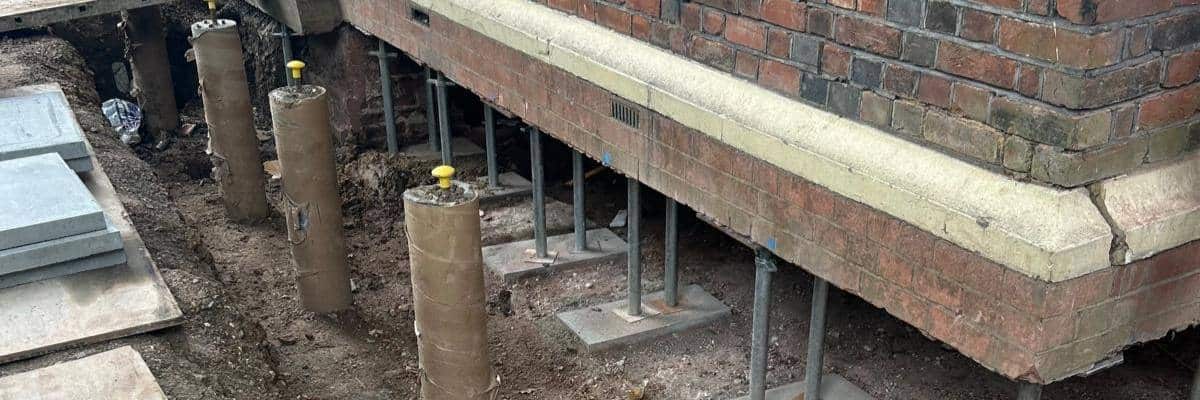
In situations where deeper, more stable ground is needed to support a structure, mini-piled underpinning may be an appropriate option. We provide mini-piled underpinning as part of our specialist foundation services, offering an engineered solution for projects where site access, existing structures or ground conditions make other techniques less suitable.
5. Repeated Cracking or Signs of Ongoing Movement
Cracks that reappear after being repaired can indicate that the underlying problem hasn’t been resolved.
While filling and redecorating may temporarily improve the appearance of damaged walls, these measures won’t prevent further cracking if structural movement continues.
Other signs of ongoing movement may include:
- Previously repaired cracks reopening
- New cracks developing in nearby areas
- Increasing distortion around doors and windows
- Progressive changes in floor levels
- Cracking that worsens during periods of dry weather
Investigating recurring structural problems early can help property owners understand the cause and avoid unnecessary repairs.
Does Every Property with Subsidence Need Underpinning?
Not necessarily.
Although underpinning can provide a long-term solution to certain foundation problems, it isn’t always required. RICS estimates that fewer than 5% of properties affected by subsidence need underpinning, with many cases resolved through less invasive measures.
Depending on the cause, alternative solutions may include repairing damaged drainage, managing vegetation or monitoring ground movement. This is why a thorough structural assessment is so important.
A qualified structural engineer can investigate the extent of movement, identify potential causes and recommend appropriate repairs.
Where underpinning is necessary, specialist contractors can then develop a suitable solution based on the property’s construction, access requirements and ground conditions.
Protecting Your Property Starts with Early Action
Foundation movement can be concerning, but recognising the warning signs doesn’t automatically mean your property requires extensive structural work.
Cracking, uneven floors, sticking doors and gaps around extensions can have several causes, and professional investigation is essential before deciding on repairs.
Identifying problems early, seeking expert advice and selecting the appropriate solution can help protect a property’s structural integrity and long-term value.
Specialist Underpinning and Foundation Repair Services
At U&M Group, we understand the importance of maintaining safe, stable foundations and delivering reliable structural solutions. Our experienced team provides specialist underpinning, foundation strengthening and structural repair services for residential, commercial and other building projects.
From traditional mass concrete underpinning to mini-piled, piled raft and beam-and-base solutions, we offer a range of techniques to suit different structures and ground conditions.
Concerned about foundation movement or looking for an experienced underpinning contractor in London, the Home Counties or South East England? Contact us today to discuss your project and find out how our specialist underpinning and structural repair services can help protect your property for the future.