



10 Mar Understanding the Different Types of Piling for Your Project
Strong foundations are critical to the safety and longevity of any building. In many construction projects across the UK, traditional shallow foundations are not sufficient due to weak ground conditions, high water tables, or heavy structural loads. In these cases, piling is used to transfer the weight of a structure deeper into the ground where the soil or rock can provide adequate support.
Piling is a type of deep foundation system where long, column-like structures (piles) are installed into the ground to support buildings and structures. These piles transfer loads either through end-bearing (resting on a strong layer such as rock) or through friction with surrounding soil. Piles can be installed using different techniques depending on the project requirements, ground conditions, access constraints, and the loads that need to be supported. Understanding the different types of piling available can help property owners, developers, and contractors choose the most suitable solution for their project.
1. Sectional Auger Mini Piles
Sectional auger mini piles are often used when access to the site is limited, such as in back gardens, basements, or tight urban spaces.
This method uses a drilling tool made up of several connected sections. As the drilling goes deeper, additional sections are added until the required depth is reached. Once the hole is drilled, it is usually filled with concrete to create the pile that will support the building.
Because the equipment is smaller and more flexible, sectional auger mini piles are a practical solution for residential extensions, underpinning work, and restricted access sites.
2. Grout Injected Continuous Flight Auger (CFA) Piling
This piling method involves drilling into the ground using a continuous spiral drill. Once the correct depth is reached, cement grout is pumped through the centre of the drill as it is slowly removed, forming the pile.
One of the key benefits of this technique is that the drill supports the sides of the hole while it is being created. This helps keep the surrounding ground stable during installation.
CFA piles are also popular because they produce very little noise or vibration, making them suitable for built-up areas or sites close to existing buildings.
3. Steel Cased Bottom Driven Piles
Steel cased bottom driven piles are installed by driving a steel casing into the ground. Unlike some other methods where the force is applied from the top, this system delivers the driving force directly to the bottom of the pile, making the process more efficient.
Because of this efficiency, these piles can often be installed using smaller machinery, which makes them suitable for sites with limited access. They are also capable of supporting significant loads, with working capacities ranging from around 5 to 85 tonnes depending on the design.
4. Steel Cased Grundomat Driven Piles
Steel cased Grundomat piles are driven into the ground using a compressed-air powered hammer inside the casing. Additional sections of casing are added as the pile goes deeper until the required depth is reached.
This system is often used on restricted access sites or projects with lighter structural loads, such as extensions or conservatories. It also produces minimal vibration, which helps reduce disruption to nearby buildings.
5. Contiguous Piling
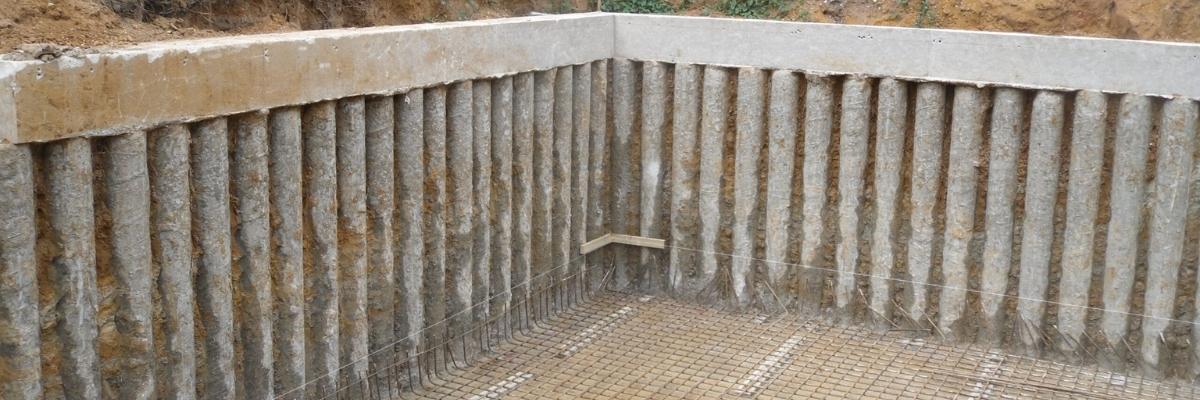
Contiguous piling is slightly different from the other methods because it is mainly used to create retaining walls rather than just support a building.
In this method, piles are installed close together in a continuous row. This forms a strong barrier that holds back soil during excavation.
Contiguous piling is commonly used for projects such as basement construction, cellar extensions, or developments built close to existing structures, where controlling ground movement is essential.
Choosing the Right Piling Method
Selecting the right piling technique depends on several factors, including:
- Ground conditions and soil type
- Structural load requirements
- Site access and space limitations
- Environmental considerations such as noise and vibration
- Project timeline and budget
A professional site investigation and structural assessment are essential to determine the most suitable piling solution for each project.
Speak to the Experts About Your Piling Project
Every construction project is different, and choosing the right foundation solution is critical to long-term structural stability. Whether you’re working on a residential extension, a commercial development, or a complex structural repair, professional guidance can make all the difference.
At U&M Group, we specialise in piling, underpinning, and structural foundation solutions across the UK. Our experienced team can assess your site conditions and recommend the most appropriate piling method for your project.
👉 Contact us today to discuss your piling requirements and get expert support for your next project.